If you are looking at Quincy for your first or next small multifamily investment, you are not alone. This market gets attention because it offers a rare mix of strong renter demand, Red Line access, and a housing stock that still includes a meaningful share of 2 to 4 family properties. The challenge is that Quincy is not a cheap or simple market, so smart investing here depends on careful underwriting, realistic rehab planning, and a clear understanding of local rules. Let’s dive in.
Why Quincy stands out
Quincy is a large, active housing market with 103,430 residents and 46,182 housing units. For a small investor, that matters because you are not shopping in a tiny town with limited inventory and unpredictable demand.
What makes Quincy especially interesting is its housing mix. According to local housing data, about 27% of the city’s housing stock is made up of 2 to 4 family properties, while 34.2% is in buildings with 5 or more units. That means small multifamily is a real part of the market here, not a narrow niche.
The city’s planning documents also tie much of Quincy’s growth to its proximity to Boston and areas near Red Line stations. For you, that supports a key investment theme: transit-connected locations can help support renter demand and absorption over time.
What small investors should expect
Quincy tends to work best for buyers who want a small multifamily or house-hack opportunity rather than a low-cost, low-maintenance rental. The city offers demand and location advantages, but entry costs are high and many buildings need work.
That creates a different investing mindset. Instead of chasing a bargain basement purchase, you are often evaluating whether an older 2-family, 3-family, or small apartment building can perform well after smart updates, steady maintenance, and disciplined financing.
For many buyers, the best-fit deal is not the prettiest property on day one. It is often a well-located property with solid long-term upside and a realistic path to improved rents or better operations.
Quincy rent trends and pricing
Rent levels in Quincy are meaningful, which is one reason investors keep watching the market. In early 2026, rent tracking data from RentCafe placed 1-bedroom units around $2,100 to $2,569 and 2-bedroom units around $2,600 to $2,983, with overall apartment averages roughly between $2,492 and $2,778.
That said, rent strength does not mean every deal cash flows. Quincy’s for-sale pricing remains high, with sources in the research placing the broader home value and listing market in the high $600,000s, including a Zillow average home value of $658,450 and a Realtor.com median around $680,000.
For small investors, that spread matters. Strong rents can help, but high acquisition costs can quickly compress returns if your financing, renovation budget, taxes, and insurance are not carefully modeled.
Vacancy is tight, but math still matters
One of Quincy’s strongest fundamentals is low vacancy. The city’s housing production plan reported an owner-occupied vacancy rate of 0.2% and a rental vacancy rate of 1.5%, both well below the plan’s cited healthy ranges.
That tells you demand has been structurally tight. In practical terms, Quincy may offer better lease-up conditions and more resilient renter demand than many lower-density suburban markets.
Still, low vacancy is not a free pass. If you overpay, underestimate repairs, or miss on taxes and operating costs, a tight rental market will not automatically save the deal.
Older buildings shape the opportunity
A big part of the Quincy multifamily story is age. The city’s housing production plan notes that 37% of units were built before 1940, while only 3% were built in 2010 or later.
For you, that means many properties come with more than cosmetic needs. Older housing can involve code compliance issues, accessibility limitations, energy-efficiency upgrades, and possible lead-paint exposure in homes built before 1978.
This is why small investors should build renovation and reserve planning into the deal from the beginning. Exterior work, systems updates, deferred maintenance, and modernization may all affect your true return more than a fresh paint job or new countertops.
Common underwriting items to watch
When you evaluate an older Quincy multifamily, pay close attention to:
- Roof and exterior condition
- Windows and insulation performance
- Heating systems and utility setup
- Electrical and plumbing updates
- Lead-paint risk in pre-1978 housing
- Code and safety compliance items
- Ongoing capital reserve needs
A property can still be a strong buy if these items need work. The key is making sure your numbers reflect reality.
Taxes can affect cash flow fast
Property taxes deserve a close look in Quincy. The city’s FY2026 tax rates list the residential rate at $11.78 per $1,000 of assessed value and the commercial rate at $23.53.
For a small investor, this means assessed value and tax treatment should be part of your cash-flow review early, not late. If you are stretching to make a deal work, taxes can become one of the easiest ways to misread the property’s monthly performance.
This is especially true in a market where purchase prices are already elevated. A deal that looks acceptable on gross rent alone may feel very different after taxes, insurance, maintenance, and reserves are fully accounted for.
Zoning and local rules matter
Quincy is not a market where you should assume every multifamily idea works by right. According to the city’s dimensional regulations, multifamily and mixed-use uses are not allowed uniformly by right across zoning districts.
In Business A and Business B districts, multifamily and mixed-use require a special permit. In Business C, they require Planning Board site plan approval, and buildings with 12 units or more must be reviewed by the Planning Board.
If you are buying with a plan to add units, change use, or reposition a property, zoning review should happen early. A deal can look strong on paper and still become much more complicated if the intended use needs approvals.
Short-term rentals are tightly regulated
If part of your strategy involves short-term rentals, Quincy has strict rules. The city requires annual short-term rental registration and inspections, and the unit generally must be the operator’s primary residence.
The ordinance also says Residence A districts are ineligible, and nonregistration can trigger a $100-per-day civil fine. For most small investors looking at Quincy multifamily, that means long-term rental planning is often the more relevant path.
Larger projects face added requirements
For projects of 10 units or more that seek certain approvals, Quincy’s Affordable Housing Ordinance may apply. The city can require compliance measures that affect planning, restrictions, or rental limitations.
That may not affect a classic 2-family or 3-family purchase, but it matters if you are comparing a small building to a larger redevelopment or assemblage opportunity.
Why transit still matters in Quincy
Quincy behaves differently from many suburban markets because of its connection to Boston and its transit-served areas. The city’s consolidated plan links recent growth to Boston proximity and Red Line station areas.
That does not guarantee every property near transit is a home run. It does mean location in Quincy should be evaluated through both neighborhood and access lenses.
For small investors, that often supports a practical question: how well does this property line up with the kind of renter who values transit access, city connection, and everyday convenience?
Best-fit deals for small investors
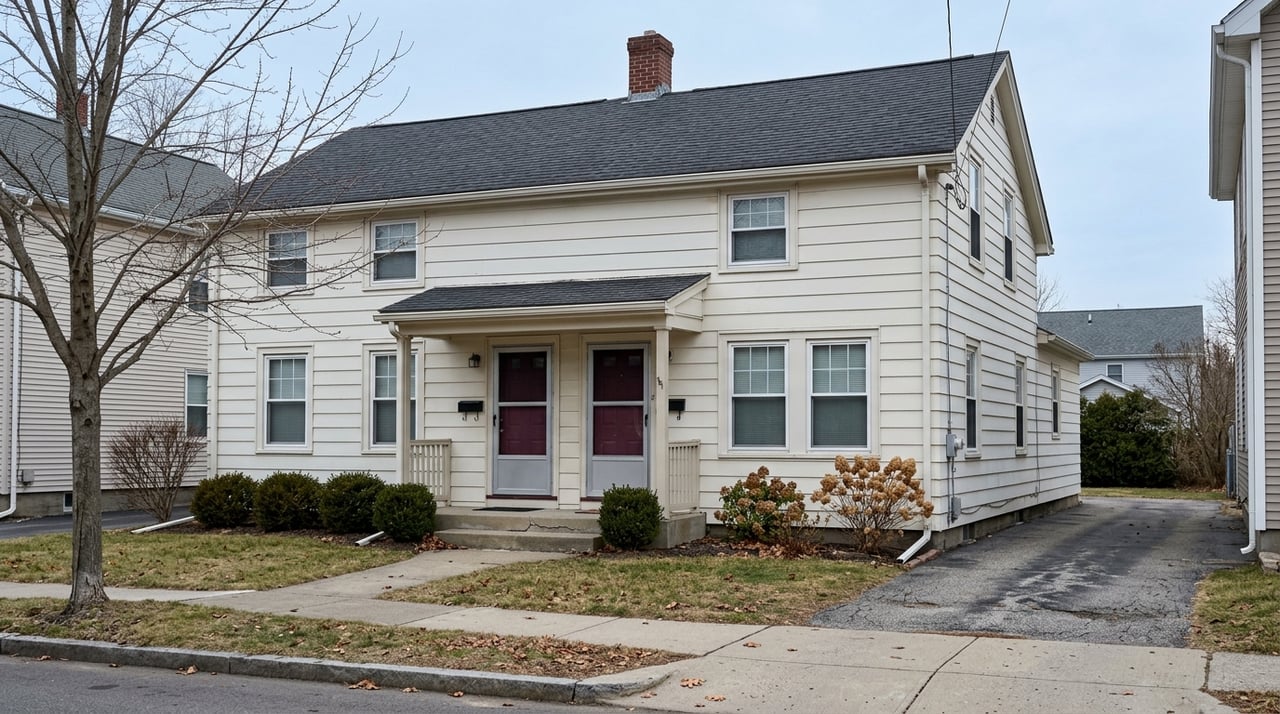
Based on the city’s housing mix, pricing, and age profile, Quincy often fits a certain type of buyer best. The most practical opportunities tend to be older, well-located 2-family or 3-family properties, or small apartment buildings where you can budget honestly for rehab and long-term upkeep.
These are often not passive investments on day one. They are better suited to investors who want to be thoughtful, hands-on, and disciplined about operations.
Here is a simple way to think about fit:
| Strategy | Quincy fit |
|---|---|
| House hacking a 2-family or 3-family | Strong fit |
| Value-add hold with realistic rehab budget | Strong fit |
| Low-entry turnkey cash-flow play | Weaker fit |
| Short-term rental focused plan | Often limited by local rules |
| Larger multifamily redevelopment | Possible, but more complex |
A smart Quincy buying checklist
Before you make an offer, it helps to pressure-test the property from several angles:
- Confirm current and future use under zoning
- Review rent potential conservatively
- Model taxes using current assessed value data
- Budget for systems, exterior, and code-related repairs
- Check whether age-related risks affect your scope or timeline
- Build reserves for ongoing capital expenses
- Make sure your financing supports the real operating picture
This kind of upfront work can protect you from buying a property that looks good in a spreadsheet but feels very different once you own it.
The bottom line on Quincy multifamily
Quincy can be a compelling market for small investors, especially if you want a transit-connected rental market with real multifamily inventory and tight vacancy. But it is usually not a market where loose assumptions or thin margins work well.
Your best results often come from buying the right small property, in the right location, with a realistic renovation and operating plan. If you approach Quincy with discipline, patience, and local market insight, the opportunity can be very real.
If you are weighing a 2-family, 3-family, or small apartment building in Quincy, working with a local team that understands both residential and investment property can make the process much clearer. Connect with Escalate Real Estate for hands-on guidance as you evaluate opportunities in Quincy and across the South Shore and Greater Boston.
FAQs
What makes Quincy attractive for small multifamily investors?
- Quincy offers a meaningful supply of 2 to 4 family housing, tight rental vacancy, and demand supported by Boston proximity and Red Line access.
What rent levels should investors expect in Quincy?
- Early 2026 rent sources in the research place Quincy roughly around $2,100 to $2,569 for 1-bedroom units and $2,600 to $2,983 for 2-bedroom units, depending on the source and property type.
Why do older Quincy multifamily properties need extra caution?
- Many Quincy homes are older, which can increase the likelihood of deferred maintenance, code updates, energy-efficiency work, and possible lead-paint concerns in pre-1978 properties.
How do Quincy property taxes affect rental property analysis?
- Quincy’s FY2026 residential tax rate is $11.78 per $1,000 of assessed value, so taxes should be built into your cash-flow analysis from the start.
Are short-term rentals easy to operate in Quincy?
- No. Quincy has strict short-term rental rules, including annual registration, inspections, and primary-residence requirements, with some zoning limitations and fines for noncompliance.
What type of Quincy investment property may fit a small investor best?
- Older but well-located 2-family and 3-family properties, or small apartment buildings with a realistic rehab and reserve budget, are often the best fit.