If you are shopping for a single-family home in Quincy, you have probably noticed one thing fast: choices can feel limited, and the good listings do not sit still for long. That can make the process feel exciting and stressful at the same time, whether you are buying your first house, moving up, or trying to stay close to transit or the water. The good news is that Quincy offers a wide range of price points, housing styles, and neighborhood options if you know how to read the market. Let’s dive in.
Quincy single-family market snapshot
Quincy is not a city where single-family homes make up most of the housing stock. Detached single-family homes account for about one third of all housing, which helps explain why inventory can feel tight when buyer demand is active.
In the March 2026 Quincy single-family market update, the median sales price was $761,500 for the month and $736,250 year to date. Inventory stood at 31 homes, with 1.1 months of supply, 27 cumulative days on market, and sellers receiving 98.9% of original list price year to date.
That mix points to a market where buyers need to move with purpose and sellers still benefit from strong pricing when a home is well presented. It also suggests that move-in-ready homes in attractive locations can draw fast attention.
Public listing portals tell a similar story, even if their counts differ. Active single-family listings have recently ranged from the mid-30s to just over 50 depending on the site, which still reflects limited supply across the city.
What tight inventory means for you
When inventory is this low, you usually need to be prepared before the right house hits the market. That means understanding your budget, your must-haves, and which tradeoffs you are willing to make.
For buyers, low supply can mean fewer chances to compare similar homes side by side. For sellers, it can create a strong opportunity, but only if the home is priced with care and presented in a way that matches current buyer expectations.
Quincy is also a market where location can shift the experience quickly. A home near the Red Line may draw a different buyer pool than a home that offers more lot space or a more coastal setting.
Quincy price ranges by area
One of the biggest challenges in Quincy is that pricing is not uniform. The city includes more accessible entry points, strong middle-market neighborhoods, and premium coastal pockets, all within a relatively small area.
Quincy Center and North Quincy
If you are looking for lower-to-mid range opportunities, Quincy Center and North Quincy are often the first places buyers watch. In March 2026, Quincy Center’s median sale price was $542,500, while North Quincy’s was $662,500.
These figures reflect all home types, not just single-family homes, so they work best as directional markers. Even so, they show that central Quincy can offer a wider spread of pricing and property types than some of the city’s more tightly held coastal areas.
Quincy Center in particular has seen recent sales ranging from the mid-$300,000s to a little over $1 million. That wide spread tells you to look closely at the specific block, home type, condition, and lot rather than relying on one citywide average.
Wollaston and Merrymount
Many buyers looking for a classic Quincy single-family home end up focusing on Wollaston and Merrymount. In March 2026, Wollaston’s median sale price was $767,000, and homes were selling in about 19 days.
Merrymount sits in a similar upper-middle range. Its 12-month median sale price was $825,000, with a median single-family sale price of $827,500 and only 1.0 month of supply.
These neighborhoods tend to appeal to buyers who want established housing stock, residential character, and solid access to the rest of Quincy and Boston. Because supply is so tight, homes that are clean, updated, and priced well can face serious competition.
Squantum and premium coastal pockets
If your search includes water-oriented neighborhoods, Squantum stands out as Quincy’s clearest premium tier. In March 2026, Redfin placed Squantum’s median sale price at $1.7 million, with homes selling in about 23 days.
That does not mean every house in Squantum lands at the top of the market. Recent closings ranged from the mid-$700,000s to about $1.9 million, which shows there is still some range depending on size, condition, and exact setting.
The broader takeaway is simple: waterfront appeal and scarcity often raise the price ceiling. If you are targeting these areas, it helps to know early whether the lifestyle and location are worth the premium for your goals.
Why transit access matters so much
Transit access is one of the biggest forces shaping Quincy home values and buyer competition. The city has four Red Line stops: North Quincy, Wollaston, Quincy Center, and Quincy Adams. Quincy Center is also served by commuter rail, and bus routes reach nearly every part of the city, including Squantum, Adams Shore, Houghs Neck, and Germantown.
In practical terms, homes closer to the T often move faster. Wollaston homes have been selling in about 19 days, North Quincy in about 21 days, and Quincy Center in about 24.5 days, with Quincy Center homes receiving about three offers on average.
That pattern creates a useful rule of thumb. The easier the commute access, or the stronger the waterfront setting, the more competition you are likely to face.
This does not mean other parts of Quincy are slow or less appealing. It means buyers often balance walkability to transit against other priorities like lot size, parking, water access, or a more detached residential feel.
What Quincy homes are like
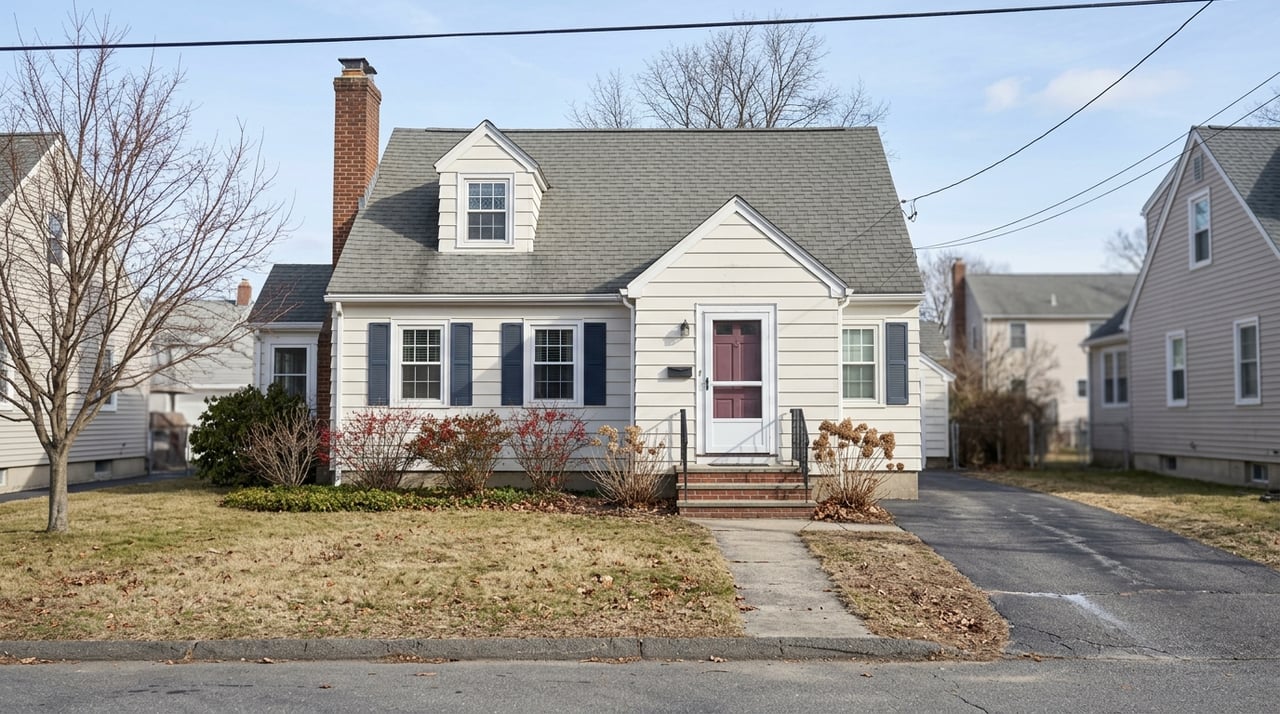
Quincy’s single-family market includes a broad mix of older homes and architectural styles. Depending on the neighborhood, you may see Cape Cod, Shingle-style, Colonial Revival, Victorian, and mid-century homes, often within a short drive of each other.
In Wollaston, guides describe a mix that includes Cape Cod, Shingle-style, and Colonial Revival homes. Merrymount also leans into older Cape Cod and Colonial Revival housing, while South Quincy includes Victorian and colonial-style properties from the early 1900s along with 1950s Cape Cods.
In Merrymount, the reported median year built is 1927, and the average single-family size is 1,703 square feet. That gives you a good sense of what to expect in many established Quincy neighborhoods: mature housing stock, practical footprints, and homes with character that may also require thoughtful upkeep.
Budget beyond the purchase price
In a competitive market, it is easy to focus only on your offer price. In Quincy, you should also factor in carrying costs early, especially property taxes.
The city’s FY2026 residential tax rate is $11.78 per $1,000 of assessed value. On a $750,000 assessment, that works out to about $8,835 per year before exemptions.
That number matters when you are comparing one neighborhood to another or deciding how much monthly payment feels comfortable. A home that stretches your purchase budget may feel even tighter once taxes and ongoing maintenance are part of the picture.
Older homes can also bring additional budgeting items, especially if updates are needed over time. Even when a house is move-in ready, it is smart to leave room for repairs, improvements, and routine upkeep.
Smart strategies for Quincy buyers
The best buyer strategy in Quincy is usually a mix of speed and clarity. You do not want to rush into the wrong home, but you also do not want to start making decisions after a strong listing already has multiple offers.
A few practical steps can help:
- Set your target monthly payment before you tour homes
- Separate your must-haves from your nice-to-haves
- Decide whether transit access, lot size, or coastal setting matters most
- Be realistic about condition if you are shopping in older housing stock
- Track neighborhood-level pricing instead of relying on one citywide number
If you are shopping in a highly competitive pocket like Wollaston, North Quincy, Merrymount, or Squantum, preparation matters even more. Knowing your comfort zone ahead of time helps you act with confidence when the right home appears.
Smart strategies for Quincy sellers
If you own a single-family home in Quincy, this market can work in your favor, but buyers are still paying attention to value. Tight inventory does not automatically mean every home will command top dollar without the right pricing and presentation.
The current data suggests that well-priced, move-in-ready listings are in a strong position. With year-to-date sellers receiving 98.9% of original list price and days on market staying relatively low, serious buyers are clearly responding when a home checks the right boxes.
Before listing, it helps to look at your home through a local lens. Transit access, neighborhood name recognition, condition, lot utility, and style all influence how buyers compare your property to other Quincy options.
A seller in Quincy also benefits from a tailored strategy rather than a one-size-fits-all plan. A house near a Red Line stop may need different positioning than a home in a coastal pocket where buyers are weighing water access and residential feel more heavily.
The Quincy takeaway
Quincy’s single-family market is competitive, varied, and full of neighborhood-by-neighborhood nuance. You are not looking at one uniform market. You are looking at a city where transit, coastal appeal, older housing stock, and tight inventory all shape what buyers pay and how sellers should prepare.
If you are buying, it helps to define your priorities early and understand where your budget fits best. If you are selling, this is a market where strong local pricing, smart presentation, and a clear plan can make a real difference.
If you want guidance tailored to your next move in Quincy, Escalate Real Estate offers hands-on, neighborhood-focused support to help you buy or sell with confidence.
FAQs
What is the current single-family home market like in Quincy?
- Quincy’s single-family market is tight, with 31 homes in inventory, 1.1 months of supply, a median sales price of $761,500 for March 2026, and 27 cumulative days on market.
Which Quincy neighborhoods tend to be most competitive for buyers?
- Areas near Red Line access and premium coastal pockets tend to be the most competitive, including Wollaston, North Quincy, Quincy Center, Merrymount, and Squantum.
How much should you budget for property taxes on a Quincy home?
- Quincy’s FY2026 residential tax rate is $11.78 per $1,000 of assessed value, so a $750,000 assessment equals about $8,835 per year before exemptions.
What kinds of single-family homes are common in Quincy?
- Quincy has a wide mix of older homes, including Cape Cod, Colonial Revival, Shingle-style, Victorian, and mid-century properties, with many neighborhoods featuring homes built in the early to mid-1900s.
Is Quincy a good place to look if you need transit access to Boston?
- Quincy offers strong transit access, with Red Line stops at North Quincy, Wollaston, Quincy Center, and Quincy Adams, plus commuter rail service at Quincy Center and bus routes serving much of the city.